
Welcome to WeeklyFest, your online destination for useful guides, technology updates, business insights, lifestyle articles, and trending topics. Our goal is to bring readers informative and engaging content that helps them discover new ideas and stay informed about subjects that matter.
The way people discover businesses online is changing rapidly. Traditional search engines remain important, but AI-powered search tools are creating new ways for customers to find information, compare services, and make purchasing decisions. For small businesses, this shift presents both a challenge and an opportunity.
You do not need a huge advertising budget to improve your digital visibility. What matters is publishing helpful information, maintaining a trustworthy online presence, and making it easy for customers to understand your products or services. At WeeklyFest, we believe that understanding digital trends can help businesses make smarter decisions and build a stronger online presence.
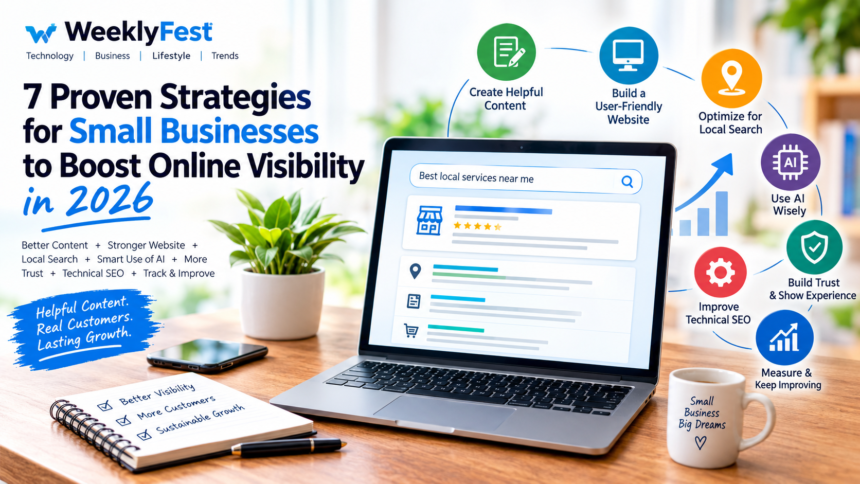
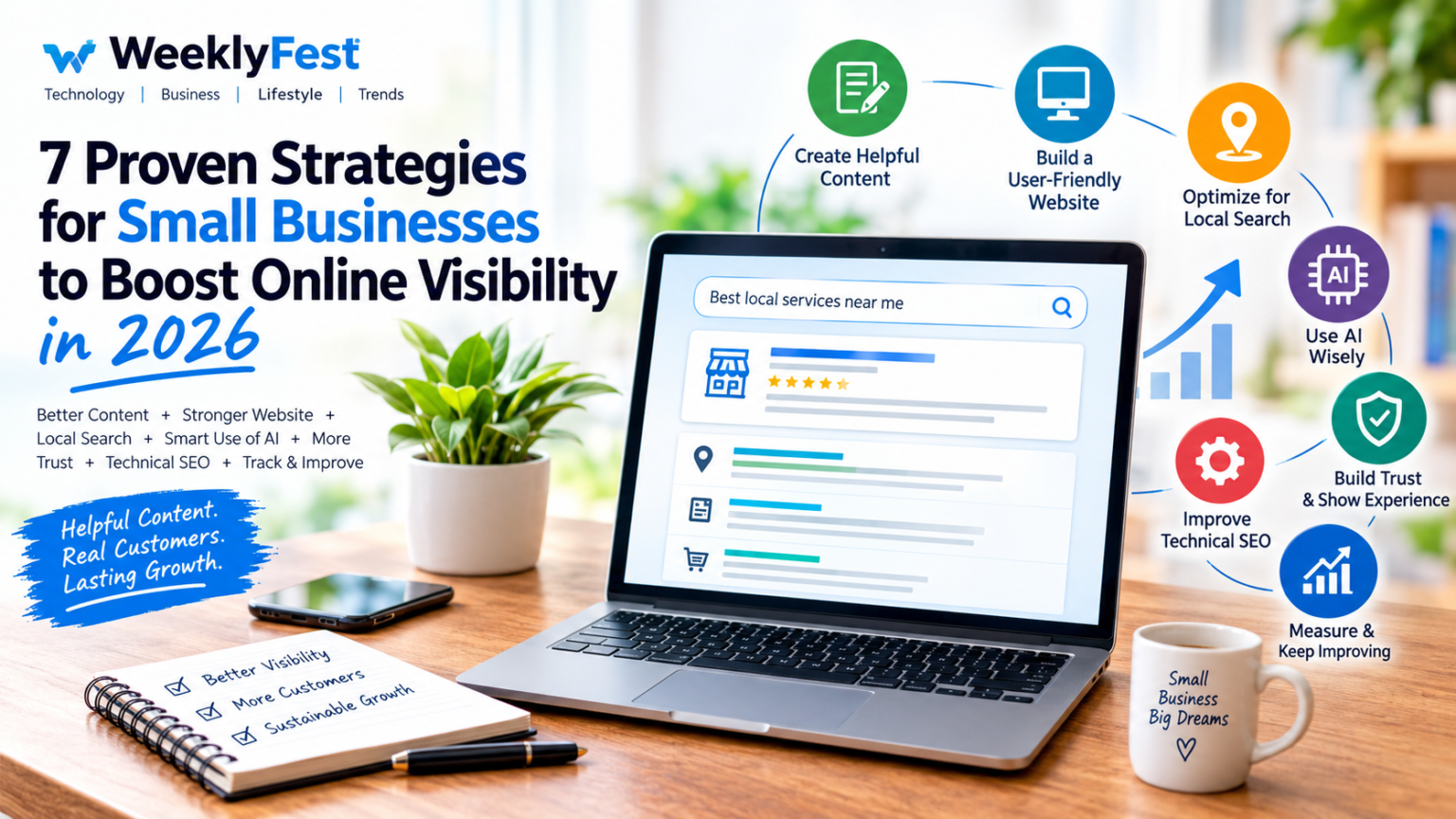
Here are seven practical strategies small businesses can use in 2026.
1. Create Content That Answers Real Questions
Customers often search for answers before choosing a product or service. Instead of publishing articles filled with repetitive keywords, focus on the questions your audience actually asks.
For example, a web design company could explain website development costs, common mistakes, maintenance requirements, and how to select the right platform. Clear answers make content more useful to readers and easier for search systems to understand.
WeeklyFest encourages businesses to focus on helpful, original information rather than publishing content simply to fill a website.
2. Make Your Website Easy to Understand
A well-organized website helps visitors navigate information and allows search engines to understand individual pages. Use descriptive page titles, meaningful headings, readable paragraphs, and relevant internal links.
Every important page should communicate its purpose quickly. Visitors should not have to navigate several menus to discover your services, prices, or contact information.
A clean design, mobile-friendly layout, and simple navigation can improve the overall experience and encourage visitors to explore further.
3. Optimize for Local Search
Local visibility is particularly important for shops, restaurants, service providers, and other businesses serving specific areas.
Keep your business name, address, phone number, and opening hours accurate across relevant online listings. Encourage genuine customer reviews and respond professionally to feedback.
Publish useful information about the locations you serve, but avoid creating multiple nearly identical pages just to target different towns. Focus on providing meaningful local information that helps potential customers make decisions.
4. Use AI as an Assistant, Not a Replacement
Artificial intelligence can help businesses brainstorm topics, create article outlines, identify common customer questions, and improve early drafts. However, automatically publishing large quantities of generic content can reduce the value of a website.
Review AI-assisted content carefully before publishing. Add original examples, practical experience, accurate information, and insights that readers cannot easily find elsewhere.
For readers of WeeklyFest, the important lesson is to use technology thoughtfully while keeping accuracy, originality, and usefulness at the center of every article.
5. Demonstrate Experience and Trust
Online visibility is not only about attracting clicks. Visitors also need reasons to believe that a business is reliable.
Publish clear contact details, explain your services honestly, identify authors where appropriate, and support factual claims with credible sources. Genuine customer feedback, relevant case studies, transparent policies, and useful demonstrations can strengthen confidence.
Never invent testimonials, qualifications, or business results. Long-term trust is more valuable than a temporary increase in attention.
6. Make Your Content Easy to Discover
Search-friendly content needs a solid technical foundation. Ensure your website works well on mobile devices, loads efficiently, and avoids broken links.
Use descriptive image filenames and meaningful alternative text. Where appropriate, implement relevant structured data and maintain an accurate XML sitemap. These steps can help search engines understand your pages, although they cannot guarantee rankings or inclusion in AI-generated answers.
Regularly check your website for technical problems and make sure important pages can be accessed and indexed.
7. Measure Results and Keep Improving
Track organic search traffic, impressions, click-through rates, enquiries, and conversions using suitable analytics tools.
Identify which pages attract relevant visitors and which questions remain unanswered. Update outdated information, improve weak pages, and create new articles when they provide genuine value.
Visibility in AI search can be difficult to measure consistently, so evaluate several indicators rather than relying on one ranking or traffic source. Small improvements made regularly can help a business develop a more sustainable online strategy.
The Bottom Line
AI is changing how people search, but the foundations of a strong online presence remain valuable: helpful information, clear website structure, trustworthy claims, and a positive customer experience.
Small businesses that invest in these principles can build a stronger digital presence without chasing every new trend. The goal is not simply to appear in search results; it is to become a useful, credible resource that customers want to choose.
As search technology continues to evolve throughout 2026, businesses that prioritize people over shortcuts will be better positioned to adapt. Keep following WeeklyFest for practical insights into technology, online business, digital trends, and smarter ways to navigate the changing internet.