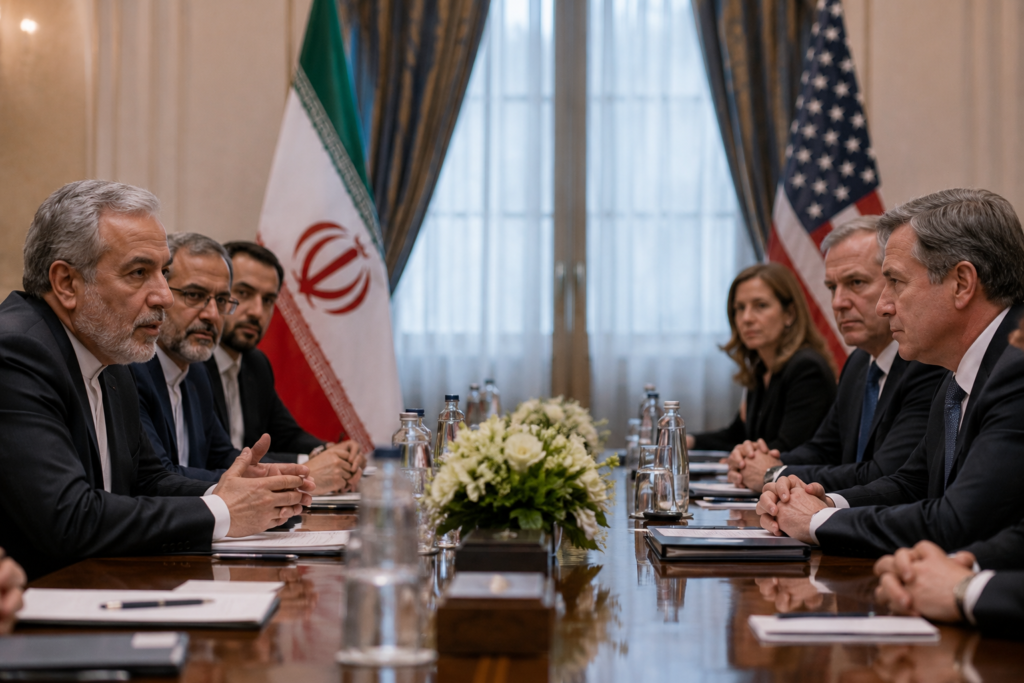

The future of Iran US diplomacy has once again become uncertain as tensions in the Middle East continue to rise. Strong statements from Tehran, growing military concerns, and international diplomatic efforts have pushed the crisis back into global headlines.
- Why Iran and the United States Remain in Conflict: Iran US Diplomacy
- Tehran Says It Will Not Surrender: Iran US Diplomacy
- Regional Conflict Is Raising Global Concerns: Iran US Diplomacy
- Oil Markets React to Rising Tensions: Iran US Diplomacy
- Military Risks Remain a Serious Concern: Iran US Diplomacy
- How Iran Is Positioning Itself Internationally: Iran US Diplomacy
- Why Diplomacy Still Has a Chance: Iran US Diplomacy
- War Would Be Costly for Everyone: Iran US Diplomacy
- Previous Talks Show Agreements Are Possible: Iran US Diplomacy
- Final Thoughts
Iranian officials recently declared that the country would not surrender under pressure while insisting that diplomacy remains better than war. These comments came during a period of increasing regional instability and fears of wider conflict.
The situation has attracted worldwide attention because any direct confrontation involving Iran and the United States could affect global security, oil markets, and regional politics far beyond the Middle East.
Why Iran and the United States Remain in Conflict: Iran US Diplomacy
The relationship between Iran and the United States has remained tense for decades.
Disagreements over Iran’s nuclear programme, sanctions, military influence, and regional alliances have repeatedly damaged diplomatic efforts.
Although periods of negotiation have occurred in the past, trust between both sides remains extremely limited.
Nuclear Programme Continues to Drive Tensions
Iran’s nuclear activities remain one of the biggest issues between Tehran and Washington.
Western countries have long expressed concern that Iran could eventually develop nuclear weapons capability. Iran, however, insists its nuclear programme is designed for peaceful purposes.
Previous agreements temporarily reduced tensions, but many diplomatic understandings later collapsed.
That failure created fresh uncertainty across the region.
Economic Sanctions Have Increased Pressure
The United States has imposed heavy sanctions on Iran over the years.
These restrictions targeted:
- Banking systems
- Oil exports
- International trade
- Financial transactions
Iranian leaders argue that sanctions have harmed ordinary citizens while increasing political tensions instead of encouraging peace.
At the same time, Washington maintains sanctions are necessary to pressure Iran over security concerns.
Tehran Says It Will Not Surrender: Iran US Diplomacy
Iranian officials recently delivered strong public messages rejecting outside pressure.
Leaders in Tehran stated clearly that the country would not surrender while also emphasizing that diplomacy remains preferable to military conflict.
These remarks came during a highly sensitive moment as regional tensions continue growing.
Diplomacy Still Seen as Important
Despite the harsh rhetoric, Iranian officials continued highlighting the importance of negotiations.
The message appears aimed at showing that Tehran remains open to dialogue but refuses to negotiate from a position of weakness.
This balancing strategy reflects Iran’s broader diplomatic approach:
- Resist external pressure
- Maintain national sovereignty
- Avoid full-scale war if possible
- Keep diplomatic channels open
The situation remains delicate because even small incidents could quickly increase tensions further.
Regional Conflict Is Raising Global Concerns: Iran US Diplomacy
The Middle East has experienced rising instability in recent months.
Several regional conflicts and military incidents have increased fears that tensions could spread beyond current battle zones.
Because Iran plays a major role in regional politics, any escalation involving Tehran could have widespread consequences.
Neighbouring Countries Are Watching Closely
Countries across the Middle East are monitoring developments carefully.
Regional governments worry about:
- Oil supply disruptions
- Refugee crises
- Maritime security risks
- Economic instability
- Expanded military conflict
The Persian Gulf remains one of the world’s most important energy corridors. Any instability there could quickly affect international energy prices.
Global Powers Are Calling for Restraint
Several international powers have urged both sides to avoid escalation.
Diplomatic efforts from regional and global actors continue behind the scenes as officials attempt to prevent direct confrontation.
Many governments believe diplomacy remains the only realistic path toward long-term stability.
Oil Markets React to Rising Tensions: Iran US Diplomacy
Whenever tensions involving Iran increase, global energy markets often react immediately.
Iran remains an important player in global oil dynamics due to its location and energy resources.
Energy Security Concerns Continue Growing
Traders and governments closely watch the Strait of Hormuz, one of the world’s most critical shipping routes.
A significant portion of global oil exports passes through this narrow waterway.
Any disruption could create:
- Higher oil prices
- Increased shipping costs
- Global inflation pressure
- Supply chain disruptions
That is why international markets respond quickly whenever tensions between Iran and the United States intensify.
Military Risks Remain a Serious Concern: Iran US Diplomacy
Although leaders continue discussing diplomacy, fears of military escalation remain high.
Military activity across the region has increased concerns that accidental confrontation could occur.
Small Incidents Could Escalate Quickly
Analysts warn that misunderstandings or isolated attacks could rapidly spiral into larger conflict.
Several factors increase this risk:
- Armed regional groups
- Military deployments
- Naval activity
- Air strikes
- Political pressure
Because multiple countries operate military forces across the Middle East, the situation remains extremely sensitive.
Public Messaging Matters
Statements from political leaders can heavily influence tensions.
Strong rhetoric may strengthen domestic political support, but it can also increase diplomatic risks if interpreted aggressively by rivals.
That is why global diplomats continue encouraging careful communication from all sides.
How Iran Is Positioning Itself Internationally: Iran US Diplomacy
Iran has worked to strengthen relationships with several global powers in recent years.
The country has expanded cooperation with:
- China
- Russia
- Regional partners
- Non-Western alliances
These partnerships help Iran reduce isolation caused by sanctions and political pressure.
Strategic Alliances Are Becoming More Important: Iran US Diplomacy
Tehran increasingly views international partnerships as essential for economic survival and political influence.
Trade agreements, energy cooperation, and diplomatic coordination have become more important as global power dynamics continue changing.
This broader geopolitical shift also affects how negotiations with the United States unfold.
Why Diplomacy Still Has a Chance: Iran US Diplomacy
Despite the growing tensions, many experts believe diplomacy remains possible.
Both sides understand the enormous risks connected to full-scale conflict.
War Would Be Costly for Everyone: Iran US Diplomacy
A wider regional war could damage:
- Global trade
- Energy markets
- Civilian populations
- International stability
Because of these risks, diplomats continue searching for ways to reduce tensions through dialogue.
Although negotiations may move slowly, diplomatic channels often remain active even during periods of public confrontation.
Previous Talks Show Agreements Are Possible: Iran US Diplomacy
Past negotiations proved that agreements between Iran and world powers can happen under the right conditions.
However, rebuilding trust remains extremely difficult after years of conflict and failed diplomatic efforts.
Future talks would likely require:
- Gradual confidence-building
- Sanctions discussions
- Security guarantees
- International monitoring
The process would almost certainly take time.
Final Thoughts
The future of Iran US diplomacy remains uncertain as political pressure, regional instability, and security concerns continue shaping events in the Middle East.
Iranian leaders insist they will not surrender under pressure while still arguing that diplomacy is wiser than war. Meanwhile, global powers continue urging restraint to avoid a wider regional crisis.
Although tensions remain dangerously high, diplomacy still appears to be the preferred option for many international actors. The coming months could prove critical in determining whether negotiations move forward or whether confrontation becomes more likely.
For now, the world continues watching closely as one of the most sensitive geopolitical relationships enters another tense chapter.
Read Other Interesting news here: Raul Castro Indictment