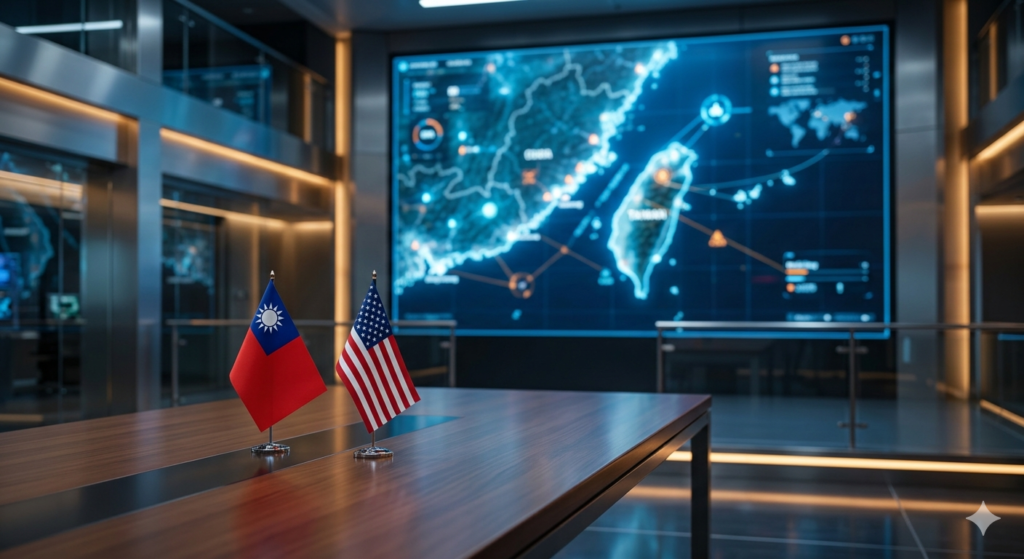

The geopolitical chessboard of the Indo-Pacific is currently undergoing a massive transformation, largely driven by the evolving Taiwan KMT China Policy. On Sunday, May 10, 2026, the eyes of the world turned toward Taipei and Beijing as the opposition Kuomintang (KMT) party took bold steps to redefine its relationship with mainland China. These moves have sparked intense debate among voters and sent ripples across the Pacific Ocean, reaching the halls of power in Washington, D.C.
For years, the political atmosphere in the Taiwan Strait has been defined by high tension and military posturing. However, the current strategy led by KMT Chairwoman Cheng Li-wun suggests a different approach. By prioritizing dialogue over confrontation, the party is attempting to position itself as a stabilizing force. But as we look closer, it becomes clear that the Taiwan KMT China Policy is about much more than just peace; it is a complex play for influence in an increasingly divided world.
The Historic Meeting in Beijing
A major pillar of the current Taiwan KMT China Policy was solidified during a historic trip to Beijing recently. Cheng Li-wun made headlines when she met with Chinese President Xi Jinping on April 10, 2026. This meeting was significant because it marked the first time the leaders of the KMT and the Chinese Communist Party (CCP) have met since 2016.
During the discussions at the Great Hall of the People, both leaders focused on a narrative of shared history. They described the cross-strait relationship as a “family matter,” a term that suggests internal resolution rather than international intervention. This phrasing is a cornerstone of the Taiwan KMT China Policy, as the party seeks to lower the temperature of military threats by emphasizing cultural and ancestral ties.
Balancing Act: Relations with the United States
While the KMT is reaching out to Beijing, they are not turning their backs on their allies in the West. A critical component of the Taiwan KMT China Policy is maintaining a strong, yet nuanced, relationship with the United States. In fact, following her trip to China, Cheng Li-wun is already preparing for a major visit to the U.S. scheduled for June 2026.
The goal of this upcoming American tour as part of the Taiwan KMT China Policy is clear:
- Explain the KMT’s vision for peace to U.S. policy leaders.
- Reassure Washington that the party remains a reliable security partner despite new dialogues.
- Address concerns regarding the party’s recent stance on defense spending.
- Engage with think tanks to present a balanced Taiwan KMT China Policy.
Shifting the Cold War Mindset
Part of the Taiwan KMT China Policy involves challenging what Cheng Li-wun calls “Cold War thinking”. The party argues that Taiwan should not be used as a “chessboard” for external powers. By engaging with international academic circles, the KMT leader hopes to present a perspective that prioritizes economic prosperity and stability over ideological warfare.
Domestic Conflict Over Defense Spending
Back home in Taipei, the Taiwan KMT China Policy faces stiff resistance from the ruling Democratic Progressive Party (DPP). The core of this domestic battle revolves around a massive NT$1.4 trillion (US$39.6 billion) special defense budget proposed by the government.
The KMT, along with the Taiwan People’s Party (TPP), has been vocal in its opposition. Recently, they successfully pushed for a more “reasonable” budget, with Cheng warning that excessive military spending could exceed the island’s financial capacity. This fiscal restraint is a key part of the Taiwan KMT China Policy, as they argue that over-investment in arms could be seen as “provocative”.
The Focus on Regional Integration
Following the Xi-Cheng meeting, there has been a renewed focus on integration policies, particularly in Fujian province. This is a tangible result of the Taiwan KMT China Policy at work.
The integration efforts include:
- Aligning legal and regulatory standards with Taiwan.
- Attracting Taiwanese businesses to the mainland with new protections.
- Increased personnel exchanges and non-governmental interactions.
- Implementing “standard-sharing” mechanisms to foster economic ties.
By linking the Taiwan KMT China Policy to direct economic benefits, the party hopes to prove that their approach brings real-world advantages to the people.
Strategic Narratives
The Taiwan KMT China Policy leverages historical narratives to weaken the perceived legitimacy of foreign intervention. By casting the cross-strait relationship as a domestic affair, the party hopes to create space for local political accommodation. However, critics worry that this narrative could inadvertently invite more pressure from Beijing.
Public Opinion and Identity Trends
Perhaps the biggest challenge to the Taiwan KMT China Policy is the shifting identity of the people it aims to serve. Recent data shows that the Taiwanese public is deeply divided along partisan lines regarding the Cheng-Xi meeting. While KMT and TPP supporters largely favor the engagement, DPP supporters remain strongly opposed.
While many citizens favor peace, there is a deep-seated hesitation toward any Taiwan KMT China Policy that suggests unification. The KMT must walk a very fine line. If their Taiwan KMT China Policy is seen as being too close to Beijing’s interests, they risk losing the support of the younger generation who identify more strictly as Taiwanese.
The International Stakeholders
It isn’t just the U.S. and China watching the Taiwan KMT China Policy unfold. Any shift in Taiwan’s security posture affects the global supply chain, specifically semiconductors. European and other world leaders have emphasized the importance of maintaining the “status quo”.
The KMT argues that their Taiwan KMT China Policy is the only way to actually preserve that status quo, as it prevents Beijing from feeling backed into a corner. They believe that dialogue is a necessary tool to prevent accidental conflict in what many consider the world’s most dangerous flashpoint.
Final Thoughts
The Taiwan KMT China Policy is a high-stakes gamble on the future of an entire region. By attempting to bridge the gap between two superpowers, the KMT is testing whether diplomacy can still triumph over military might in the 21st century. The strategy seeks to balance regional peace with national security.
As Cheng Li-wun prepares for her historic flight to the United States, the world waits to see if this new Taiwan KMT China Policy can truly bring stability to the Taiwan Strait. Only time will tell if this policy is a brilliant diplomatic breakthrough or a risky concession. If you are interested in the future of global security, keep following our blog for more updates.
Read Other Interesting news here: Bolsonaro Prison Sentence