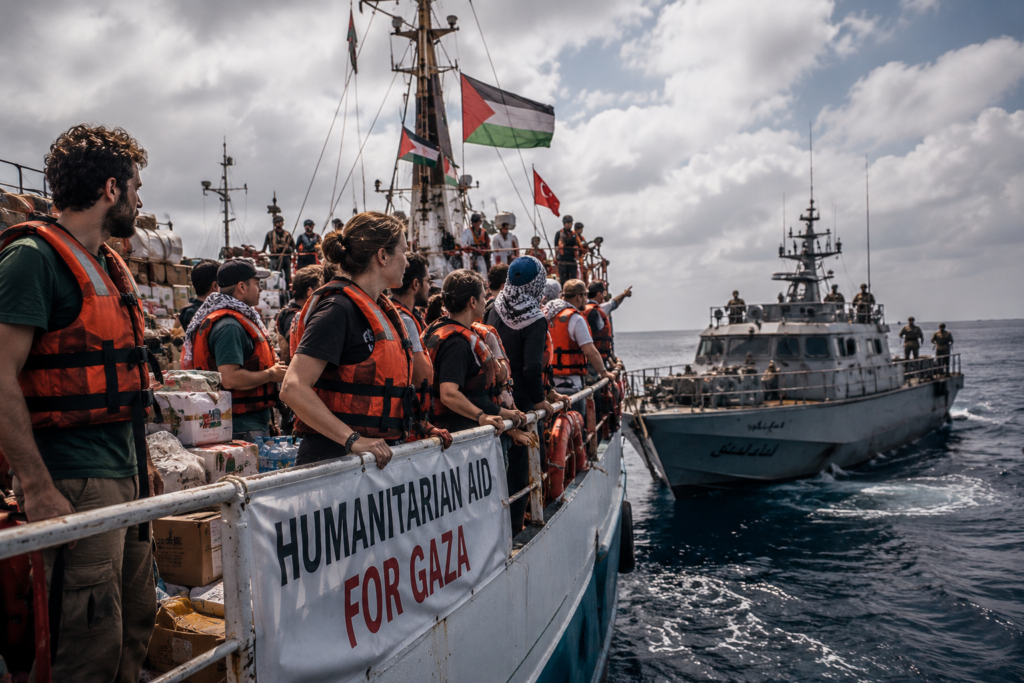

The latest developments involving the Gaza Aid Flotilla have triggered intense international attention after Israel began deporting activists linked to the humanitarian mission.
- What Is the Gaza Aid Flotilla?
- Israel Begins Deporting Activists: Gaza Aid Flotilla
- Why Gaza Remains at the Center of Global Attention: Gaza Aid Flotilla
- Israel Defends Its Actions: Gaza Aid Flotilla
- Humanitarian Activism Is Becoming More Visible
- The Incident Could Affect International Relations
- Media Coverage Is Shaping Global Debate
- The Broader Gaza Crisis Continues
- Final Thoughts
The incident quickly sparked diplomatic reactions, protests, and renewed debate about humanitarian access to Gaza. Governments, activists, and international organisations are now closely monitoring the situation as political pressure grows worldwide.
The flotilla mission was intended to deliver humanitarian aid and draw global attention to conditions in Gaza. Instead, it has now become the center of another major international dispute involving Israel, activists, and global diplomacy.
What Is the Gaza Aid Flotilla?
The Gaza Aid Flotilla refers to a group of vessels organized by activists attempting to deliver aid to Gaza by sea.
These missions are often supported by international campaign groups, humanitarian activists, and pro-Palestinian organisations seeking to challenge restrictions around Gaza.
The flotilla involved participants from multiple countries and attracted widespread media attention before reaching the region.
Why Activists Joined the Mission
Many activists said they joined the flotilla to:
- Deliver humanitarian assistance
- Raise awareness about Gaza
- Protest restrictions affecting civilians
- Draw international media attention
Participants argued the mission was focused on humanitarian concerns rather than political confrontation.
However, the operation quickly became politically sensitive due to the ongoing conflict in the region.
Israel Begins Deporting Activists: Gaza Aid Flotilla
Israeli authorities moved to deport several activists connected to the flotilla after intercepting the mission.
The deportation process immediately became international news as governments and human rights groups demanded more information about the treatment of those detained.
International Reactions Grew Quickly
The incident triggered reactions from:
- Human rights organisations
- Foreign governments
- Activist networks
- International legal observers
Critics accused Israel of blocking humanitarian efforts, while Israeli officials defended their actions as necessary for national security and border enforcement.
The situation quickly expanded into a wider diplomatic issue.
Legal and Political Questions Emerged
The deportations raised questions involving:
- Maritime law
- Humanitarian access
- International diplomacy
- Security policies
Legal experts and political analysts continue debating the legality and implications of such actions under international law.
Why Gaza Remains at the Center of Global Attention: Gaza Aid Flotilla
Gaza has remained one of the most closely watched conflict zones in the world for many years.
The humanitarian situation there continues attracting concern from international organisations and governments.
Aid Access Remains a Sensitive Issue
Humanitarian groups have repeatedly called for improved aid access into Gaza.
Key concerns often include:
- Food supplies
- Medical support
- Fuel shortages
- Infrastructure damage
- Civilian welfare
Aid organisations argue that civilians continue facing severe hardships due to ongoing instability and restrictions.
International Pressure Continues Growing
Global calls for humanitarian access have intensified during recent periods of conflict.
Several governments and international bodies have urged all parties to allow greater support for civilians affected by the crisis.
At the same time, security concerns remain central to Israel’s position.
Israel Defends Its Actions: Gaza Aid Flotilla
Israeli officials maintain that maritime restrictions are necessary for security reasons.
Authorities argue that preventing unauthorized sea access is part of broader efforts to control weapons smuggling and maintain national security.
Security Concerns Remain Central
Israel has long argued that security measures surrounding Gaza are essential due to ongoing threats from armed groups.
Officials frequently point to:
- Rocket attacks
- Regional instability
- Smuggling concerns
- Armed militant activity
These security arguments continue shaping Israeli policy decisions involving Gaza access.
Diplomatic Pressure Is Increasing
Despite Israel’s security position, international criticism has continued growing.
Some governments have called for restraint and improved humanitarian coordination to avoid escalating tensions further.
Diplomatic discussions are expected to continue as global scrutiny intensifies.
Humanitarian Activism Is Becoming More Visible
The flotilla mission reflects a broader trend of international activism connected to humanitarian crises.
Social media and global news coverage have made such campaigns more visible than ever before.
Activists Use International Attention Strategically
Humanitarian campaigns often aim to increase public awareness and political pressure through international visibility.
By organizing highly publicized missions, activists hope to:
- Influence global opinion
- Encourage diplomatic action
- Increase humanitarian support
- Highlight civilian suffering
The Gaza Aid Flotilla became a major media story partly because of its international participants and political symbolism.
Public Opinion Plays a Growing Role
Public reactions on social media and international news platforms can quickly influence diplomatic discussions.
Governments increasingly face pressure from both domestic and international audiences during high-profile humanitarian incidents.
The Incident Could Affect International Relations
The flotilla deportations may create diplomatic complications between Israel and several countries whose citizens participated in the mission.
Governments often become involved when their nationals are detained abroad during politically sensitive events.
Foreign Governments May Seek Clarification
Some countries could request:
- Consular access
- Legal explanations
- Diplomatic briefings
- Humanitarian assurances
International incidents involving activists frequently evolve into broader diplomatic discussions.
Human Rights Groups Continue Monitoring Events
Human rights organisations are expected to continue monitoring the treatment of deported activists and broader humanitarian conditions linked to Gaza.
These groups often play an important role in shaping international awareness and political pressure.
Media Coverage Is Shaping Global Debate
The Gaza conflict remains one of the world’s most heavily covered geopolitical issues.
Every major development quickly receives international media attention.
Competing Narratives Continue Emerging
Different groups continue presenting sharply different interpretations of events.
Some focus primarily on:
- Humanitarian concerns
- Civilian suffering
- International law
Others emphasize:
- Security threats
- National defense
- Regional instability
This divide often shapes how international audiences understand the conflict.
The Broader Gaza Crisis Continues
The flotilla incident is only one part of a much larger humanitarian and political crisis.
The region continues facing severe instability, humanitarian challenges, and diplomatic deadlock.
Long-Term Solutions Remain Difficult
Despite years of negotiations and international mediation efforts, lasting solutions remain extremely difficult to achieve.
Key issues continue involving:
- Security
- Borders
- Humanitarian access
- Political recognition
- Regional stability
The situation remains highly sensitive and deeply complex.
Final Thoughts
The latest developments involving the Gaza Aid Flotilla have once again placed Gaza at the center of global political and humanitarian debate.
Israel’s decision to begin deporting activists has triggered strong international reactions while also reopening broader discussions about aid access, security concerns, and international law.
As governments, activists, and international organisations continue responding to the incident, the situation highlights how deeply connected humanitarian issues and geopolitics remain in the region.
The coming weeks may determine whether diplomatic tensions ease or whether the flotilla controversy creates even greater international pressure surrounding the Gaza crisis.
Read Other Interesting news here: Raul Castro Indictment