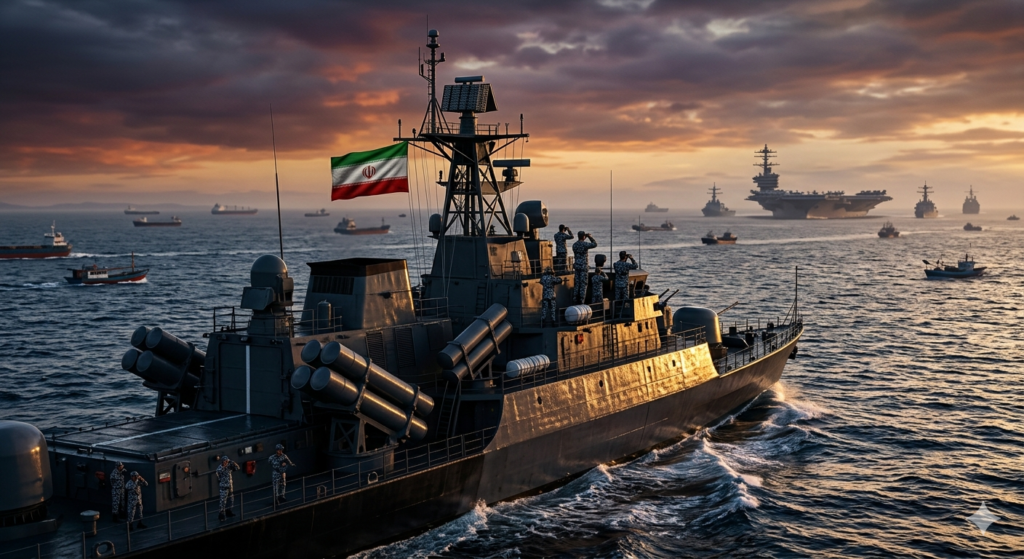

The Middle East is currently balancing on a razor’s edge as Iran war tension reaches a critical boiling point. While a fragile ceasefire between Tehran and Washington technically remains in place, the rhetoric on the ground suggests a storm is brewing. On May 10, 2026, the world watched closely as the Islamic Revolutionary Guard Corps (IRGC) issued a stern ultimatum to the United States, specifically regarding the safety of Iranian maritime interests. To understand the Iran war tension, one must look at the recent maritime blockades and the air campaign currently devastating parts of the Levant.
Meanwhile, the conflict is not limited to the seas. Israel has continued a heavy bombardment of Lebanon, leading to significant casualties and a worsening humanitarian crisis. As the Strait of Hormuz becomes a focal point of global economic anxiety, the international community is scrambling to prevent a total regional collapse. Many experts believe the Iran war tension is now affecting global oil prices more than any other geopolitical factor in the last decade.
The IRGC Issues a Final Warning to the United States
The IRGC has made its position crystal clear: any aggression directed at Iranian oil tankers or commercial vessels will lead to immediate retaliation. This statement comes at a time when the Strait of Hormuz is under intense surveillance. The Iranian military has stated that their “restraint is over,” further escalating the Iran war tension felt across the globe.
Protecting the Maritime Lifeblood
Iranian officials, including Ebrahim Rezaei from the parliament’s National Security Committee, took to social media to signal a shift in policy. He warned that the “clock is ticking” for American interests in the region. If US forces or their allies target Iranian ships, the IRGC plans to strike back at US bases and “enemy ships” throughout the Middle East. This direct threat has added a dangerous layer to the Iran war tension currently felt by international shipping companies.
New Weapons and Warfare Methods
An Iranian military spokesperson, Akrami Nia, added weight to these threats. He suggested that if provoked, Iran would deploy new weapons and warfare methods that would “surprise” its enemies. This escalatory language highlights the fragility of the current peace and the high stakes involved in the Iran war tension. Every new announcement from Tehran seems designed to remind the world that the Iran war tension could lead to a hot conflict at any moment.
Israel’s Military Campaign in Lebanon Intensifies
While the world watches the Persian Gulf, the situation in Lebanon is devastating. Israeli air strikes have been relentless, targeting multiple towns and villages across the southern region. These attacks are not just localized skirmishes; they represent a sustained military effort that mirrors the rising Iran war tension in the north.
Rising Death Toll and Targeted Strikes
On Saturday alone, Israeli attacks killed at least 24 people in Lebanon. Recent reports from the National News Agency (NNA) indicate that drones and warplanes have hit locations such as Majdal Selem, al-Mansouri, and Bilda. There is a growing pattern of what observers call “targeted assassinations.” These precision strikes are occurring simultaneously with the buildup of Iran war tension on the maritime borders.
Heartbreaking Casualties in Saksakiyeh
One of the most tragic incidents occurred in the coastal town of Saksakiyeh, where at least seven people lost their lives, including children. Such incidents are fueling local anger and making the prospect of face-to-face peace talks between Lebanese and Israeli leaders seem nearly impossible. The emotional toll of the conflict is a silent partner to the loud Iran war tension seen in official military statements.
The Economic Impact of the Iran War Tension
The conflict is not just a regional security issue; it is a global economic nightmare. The Strait of Hormuz is a vital artery for the world’s energy supply, and any disruption there sends shockwaves through international markets, worsening the Iran war tension impact on daily lives far from the border.
Billion-Barrel Oil Shortage
Amin Nasser, the CEO of Saudi Aramco, recently revealed a staggering statistic. He stated that the global market has been deprived of approximately one billion barrels of oil over the last two months due to the ongoing conflict. This supply shock is driving up prices and creating uncertainty for industries worldwide, all because of the persistent Iran war tension.
Record Profits Amidst Chaos
Interestingly, while the world suffers from supply issues, Saudi Aramco reported a net profit of 120.13 billion riyals (roughly $32.5 billion) for the first quarter of 2026. This is a 25.5 percent increase, driven largely by the volatility and increased sales during the crisis. This financial surge is one of the few positive metrics in an era defined by Iran war tension.
US Central Command and the Blockade
The United States, through CENTCOM, has been active in enforcing restrictions. Since April 13, US forces have reportedly disabled four ships and prevented 58 commercial vessels from entering or exiting Iranian ports. This maritime blockade is a major point of contention for Tehran, which views these actions as the primary cause of the Iran war tension.
The Conflict of Sanctions
Iran has warned that any country following the US in imposing or enforcing sanctions will face severe difficulties when trying to pass through the Strait of Hormuz. This threat puts many international shipping companies in a precarious position. They are caught in the middle of the Iran war tension, forced to choose between US legal compliance and the physical safety of their fleets.
The Search for a Diplomatic Exit
Despite the aggressive posturing, diplomatic channels remain open, albeit strained. Countries like Qatar and Pakistan are playing significant roles as mediators, trying to bring all parties to the table to resolve the Iran war tension peacefully.
Mediation Efforts in Doha
Qatar’s Prime Minister recently met with the US Secretary of State to discuss a path forward. The goal is to find a comprehensive agreement that addresses the “roots of the crisis.” However, the “self-defense” clauses used by Israel and the rigid demands of the IRGC make finding a middle ground for the Iran war tension extremely difficult.
Lebanon’s Stance on Peace
The Lebanese government is in a tough spot. While they want the bombing to stop and for Israeli troops to withdraw, they are under pressure from the US and Israel to disarm Hezbollah. For many Lebanese citizens, the priority is reconstruction, yet the Iran war tension overhead makes long-term planning almost impossible.
Final Thoughts
The current state of Iran war tension is a complex web of military action, economic warfare, and desperate diplomacy. With Tehran declaring that its “restraint is over” and Israel continuing its campaign in Lebanon, the risk of a wider conflagration has never been higher. The loss of life in Gaza and Lebanon, combined with the global oil crisis, demands a resolution.
The Iran war tension must be managed before it evolves into a global catastrophe. We must hope that the ongoing mediation efforts can find a way to silence the guns and cool the Iran war tension before the region descends into further chaos.
What do you think is the key to de-escalating this crisis? Share your thoughts in the comments below and stay tuned for more updates on the Iran war tension.
Read Other Interesting news here: Trump Project Freedom Plus